

CONCEPT OF JOINTING AND FINISHING
INR 0
Enquire
Description
Jointing and finishing is the process though which gypsum board systems are transformed into smooth, structurally sound walls and ceilings. This process eventually determines the look of the interiors. Levels of Jointing and Finishing Introduction Traditionally, the quality of a surface has been judged subjectively, with the use of phrases such as “ready-for-painting”, “ready-for-covering” and so on. However, these are not suitable for describing the level of finish. A “finished” and “ready-for-painting” surface for one person may be a sub-standard one for another. The quality of finish of gypsum board is defined by the Euro Gypsum standards (based on EN 13963). The level of finish is affected by the dimensional tolerances of boards, metal framings and level of workmanship. The flatness of the drywall and ceiling also impact the level of finish. Local Flatness Standards A ruler of 200 mm applied on the cladding of the drywall, particularly at the joints, must not have a difference bigger than 1 mm between the most salient point and the point furthest away. General Flatness Standards A ruler of 2000 mm length applied to the face of the drywall and moved in all directions must not have a difference bigger than 4 mm between the most salient point and the point furthest away Jointing and finishing stages The jointing of gypsum board goes through stages Q1 and Q2 and finishing from Q3 to Q4. Shallow light (natural or artificial) can affect the appearance of the surface. Ideally, lighting conditions where the board systems are used should be known in advance. The surface quality should not be judged by flood-lighting, and the limits of manual workmanship should be considered.
other Products
 Application Access panel provides protected access to service areas towards installation or repair of utility
METAL CEILING ACCESSORI...
 This ceiling panel is laminated with a Diamond texture white color PVC film on the face side and a metalised p
PVC Gypsum Tile 569
INR 60 Gyproc Supreme is lightweight one coat gypsum plaster suitable for direct application on all internal substrat
Gyproc Supreme Gypsum P...
INR 230 Introduction Gyproc BOND-it is a bonding agent that enables quick preparation of ceiling and wall surfaces (es
BONDING
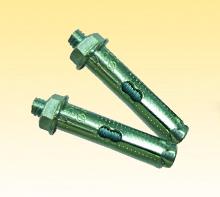 Application Expandable fastener to hold the ceiling Dimensions in (mm) 8 x 45mm
METAL CEILING ACCESSORI...
INR 750